TOSHIBA M-5020 Video Cassette Recorder Repair Parts/repair
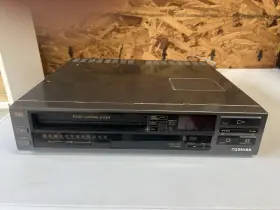
( Brand: Toshiba ), ( Manufacturer Part Number: M-5020 ), ( Playable Media: Vhs ), ( Type: Video Cassette Player ), ( Unit Type: Unit )
Review TOSHIBA Video Cassette Recorder Parts/repair
Toshiba M-5020 Video Cassette Recorder Parts and Repair
The Toshiba M-5020 Video Cassette Recorder (VCR) is a classic piece of home entertainment technology that has stood the test of time. This model, introduced by Toshiba in the late 1980s, is known for its durability and high-quality recording capabilities. However, like all electronic devices, the M-5020 VCR may eventually require repairs or replacement of certain parts. In this description, we'll outline some common issues and the corresponding solutions for the Toshiba M-5020 VCR.
1. Playback Issues
If your M-5020 VCR is experiencing playback problems, it could be due to a malfunctioning transport mechanism or a dirty video head. The transport mechanism, which includes the capstan, pinch roller, and tension roller, is responsible for pulling the video tape across the recording and playback heads. A worn-out or misaligned transport mechanism can cause the tape to jump, freeze, or not play at all. In contrast, a dirty video head can result in a distorted picture or sound. To fix these issues, you may need to replace the damaged parts or clean the video head using a specialized cleaning solution.
2. Motor Issues
Motor problems can prevent the VCR from spinning the tape or winding it up correctly. The motors involved in the VCR's operation include the capstan motor, the reel motor, and the servo motor. A faulty capstan motor can cause the tape to not feed properly during playback or recording, while a malfunctioning reel motor can prevent the tape from rewinding or winding up during recording. A bad servo motor can lead to tracking issues, causing the picture to jump or flicker. To address these motor problems, you may need to replace the faulty motor or the entire motor assembly.
3. Sound Issues
The M-5020 VCR might encounter sound problems, such as hissing, static, or no sound at all. These issues could be caused by a damaged audio head, a faulty amplifier, or a malfunctioning speaker. A dirty or worn-out audio head can produce a hissing or static noise during playback. A damaged amplifier may not be able to provide enough power to the speakers, resulting in weak or muffled sound. In some cases, the speakers themselves may be damaged or not functioning correctly. To resolve sound issues, you may need to clean or replace the audio head, repair or replace the amplifier, or replace the speakers.
4. Power Issues
Power-related problems can prevent the VCR from turning on or cause it to shut off unexpectedly. These issues can be caused by a faulty power supply, a damaged power cord, or a blown fuse. A malfunctioning power supply can fail to provide the necessary voltage to the VCR, preventing it from functioning correctly. A damaged power cord can expose the internal wiring, potentially causing a short circuit. A blown fuse can prevent power from reaching specific components within the VCR. To solve power issues, you may need to replace the faulty power supply, repair or replace the power cord, or replace the blown fuse.
5. Repair and Parts Sourcing
To repair your Toshiba M-5020 Video Cassette Recorder, you can either attempt the repairs yourself or consult a professional repair service. If you choose to do the repairs yourself, you'll need to source the appropriate parts for your VCR. You can find replacement parts for the Toshiba M-5020 VCR from various online retailers, specialized repair shops, or even through Toshiba's official parts department. Make sure to verify the compatibility of the parts before making a purchase to ensure a successful repair. If you prefer not to tackle the repairs yourself, consider seeking assistance from a professional repair service that specializes in Toshiba VCRs.
With the information provided above, you now have a better understanding of common issues and solutions for the Toshiba M-5020 Video Cassette Recorder. Remember, maintaining your VCR and addressing any issues promptly can help ensure its longevity and continued functionality.
Buying Toshiba M-5020 Video Cassette Recorder parts for repair can be a viable option for those who prefer keeping their old VCRs instead of upgrading to a new one. Here are some pros and cons to consider before making a decision:
Pros:1. Cost-effective: Buying individual parts instead of a new VCR can save a significant amount of money, especially if the VCR is still in good condition otherwise.
2. Sentimental value: Old VCRs can hold sentimental value, and repairing them instead of replacing them can help preserve those memories.
3. Customizability: Repairing the VCR with original parts ensures that the machine functions exactly as intended by the manufacturer.
4. Environmental impact: Repairing instead of replacing reduces the amount of electronic waste that ends up in landfills.
Cons:1. Time-consuming: Finding the right parts, diagnosing the issue, and performing the repair can be a lengthy process.
2. Availability of parts: Some parts for older VCRs may be difficult to find or no longer available.
3. Compatibility issues: Compatibility issues with newer tapes or recording formats may arise.
4. Obsolescence: As technology advances, VCRs may become increasingly obsolete.
In conclusion, buying Toshiba M-5020 Video Cassette Recorder parts for repair can be a cost-effective and environmentally friendly option for those who value their old VCRs. However, it may require a significant investment of time and effort to find the right parts and perform the repair. Additionally, compatibility issues and the potential obsolescence of VCRs should be considered before making a decision.
If the VCR is in good condition otherwise and the desired part is readily available, repairing it may be a worthwhile investment. However, if the VCR has multiple issues or is no longer compatible with newer recording formats, it may be more cost-effective to upgrade to a new VCR or consider alternative methods of preserving and accessing old tapes, such as digital conversion services.
Details:
Unable to test any further. Powers on, but turns off when trying to play the cassette.
part #: m5020 price
- $35.00
specifications oldievcrs:
- brand: Toshiba
- mpn: M-5020
- playable media: Vhs
- type: Video Cassette Player
- unit type: Unit
returns oldievcrs:
- policy: No Returns
seller oldievcrs:
- city: Cambridge, Wisconsin
- # reviews: 3
- rating: 100.0%
offer oldievcrs:
- started: August 3, 2025
- availability: In Stock
- options: Ship-to-home
- quantity: 1
- sold: 0
- best offers: True
shipping oldievcrs:
- cost: $17.91
- transit: 5-12 Days
- carrier: USPS
- class: Standard
- type: Calculated
- service: USPS Ground Advantage
payments oldievcrs:
- wallet: Apple-pay
- credit card: Mastercard
- other
general oldievcrs:
- Vintage Electronics > Vintage Audio Video > VCRs
- condition: For parts or not working
Toshiba M-5020 Is Similar To:
- Toshiba M-454 Video Cassette Recorder 4 Heads Vhs In Gray Color Without Remote (60.5% similar) Toshiba video cassette recorder M-454, 4 heads, vhs, in gray color w/o remote. Due to its used condition, and w/o remote please see pictures 1,8,9, 11 carefully. Model: M-454. Brand: Toshiba. Type: video cassette recorder. Only comes with whats pictured. Please review...(May 22nd, 2024)
- Toshiba W-614r 4-head Hifi Stereo Vcr Vhs Player Recorder And Cleaning Tape Tested (43.6% similar) Includes a new/old stock sealed head cleaning tape. Tested functioning as expected. Remote/cords not included...(May 22nd, 2024)
- Toshiba M-735 Vcr Vhs Player With Remote Tested Working Video Cassette Recorder (53.8% similar) Comes with remote, power cord, rca a/v cable and blank vhs tape. Toshiba M-735 VCR vhs player with remote tested working video cassette recorder this item is used...(May 22nd, 2024)
- Toshiba Sd-v392 Dvd Vcr Player Recorder Combo Hi-fi Stereo With Remote A v Cables (43.9% similar) Tested, working, cleaned. Cleaned the VCR tape heads, and DVD laser head. Good condition. Comes with its original remote control. This ships padded and double boxed for added protection during shipping. Excellent cosmetic shape. Fast shipping...(May 27th, 2024)
- Toshiba W-603 Serviced 4-head Vcr Vhs Hi-fi Stereo Original Remote New Cassette (36.9% similar) Toshiba model W-603 4-HEAD vhs VCR hi-fie stereo original remote new tape tested...(May 28th, 2024)
- Toshiba W-528 Video Cassette Recorder With Remote Tested Great Working Condition (64.1% similar) Both tested and both working. In great working condition. Come with Toshiba remote...(May 29th, 2024)
- Toshiba M-624 Vcr 4-head Vhs Player Recorder No Remote Tested Manual (47.1% similar) Although a remote is not included, the VCR can be easily operated with its user-friendly interface. With four heads and a range of settings, it offers clear smooth playback experience. The VCR is compatible with various types of tapes, making it a must-have for vintage audio and...(May 30th, 2024)
- Toshiba W604 W-604 4-head Vcr Recorder Vhs Player Hi-fi Stereo For Parts Only (42.2% similar) Unit powers on but will not play or eject a tape that is stuck in there...(May 31st, 2024)
- Toshiba M-761 M-760 6-head Vcr Plus Vhs Video Cassette Player Tested (52.1% similar) Could not test for picture quality fast shipping. Tested to power on and play...(May 31st, 2024)
- Toshiba W627 Vintage Vcr Vhs Player Recorder W627 Works Perfectly No Remote (44.1% similar) It has been tested and works perfectly, without any need for repairs. The model number is W627 and it compatible with vhs tapes. Vintage Toshiba VCR vhs player recorder W627. This vintage Toshiba VCR vhs player recorder is a great addition to any home entertainment system. It is a video...(May 31st, 2024)
- Toshiba V-m411 V-m41 1 Beta Betamax Vcr Video Cassette Recorder Silver Vintage Japan (54.8% similar) Unknown if it properly works, turns on but was not able to test since I don't have beta max tapes the item with. Sold as is for parts...(June 3rd, 2024)